
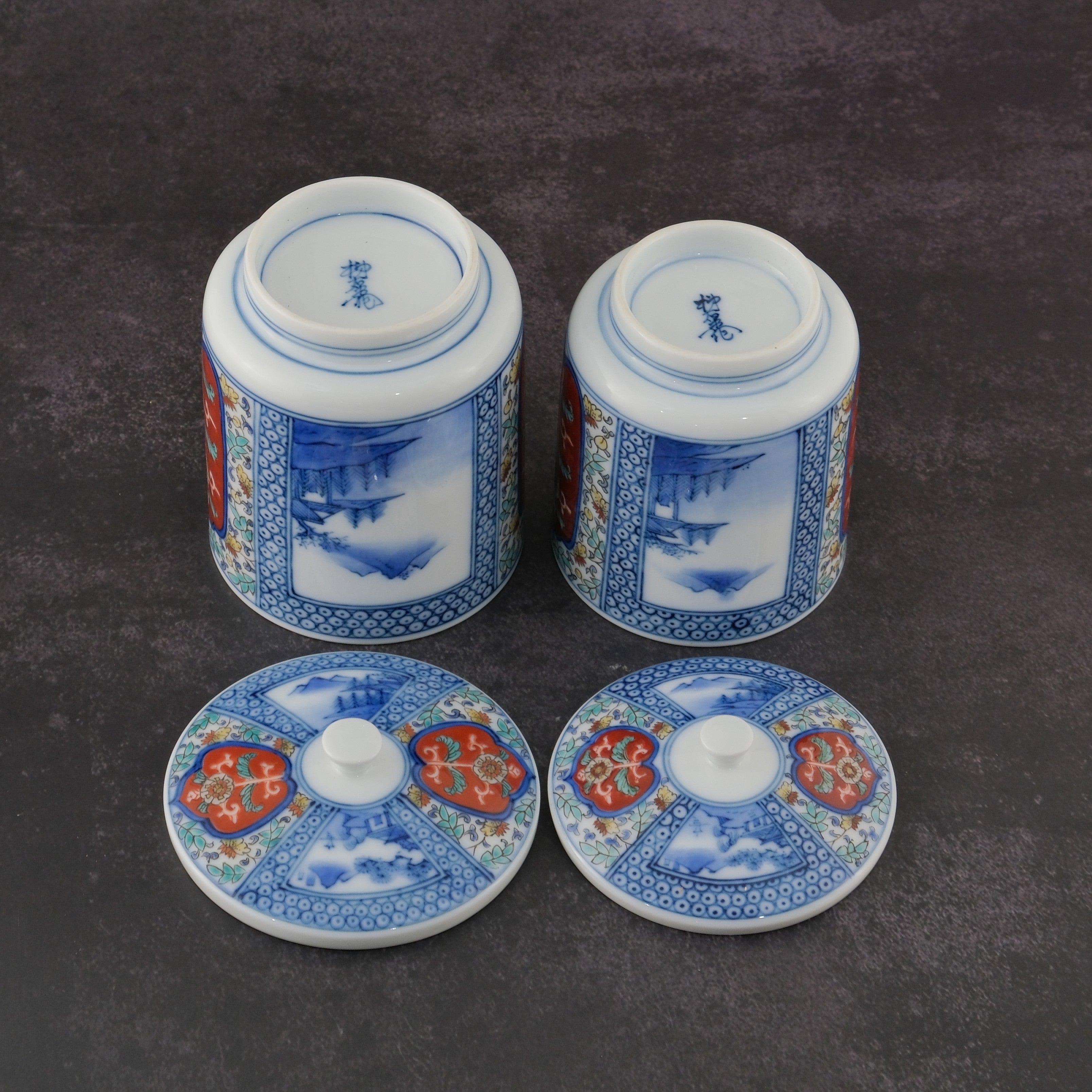
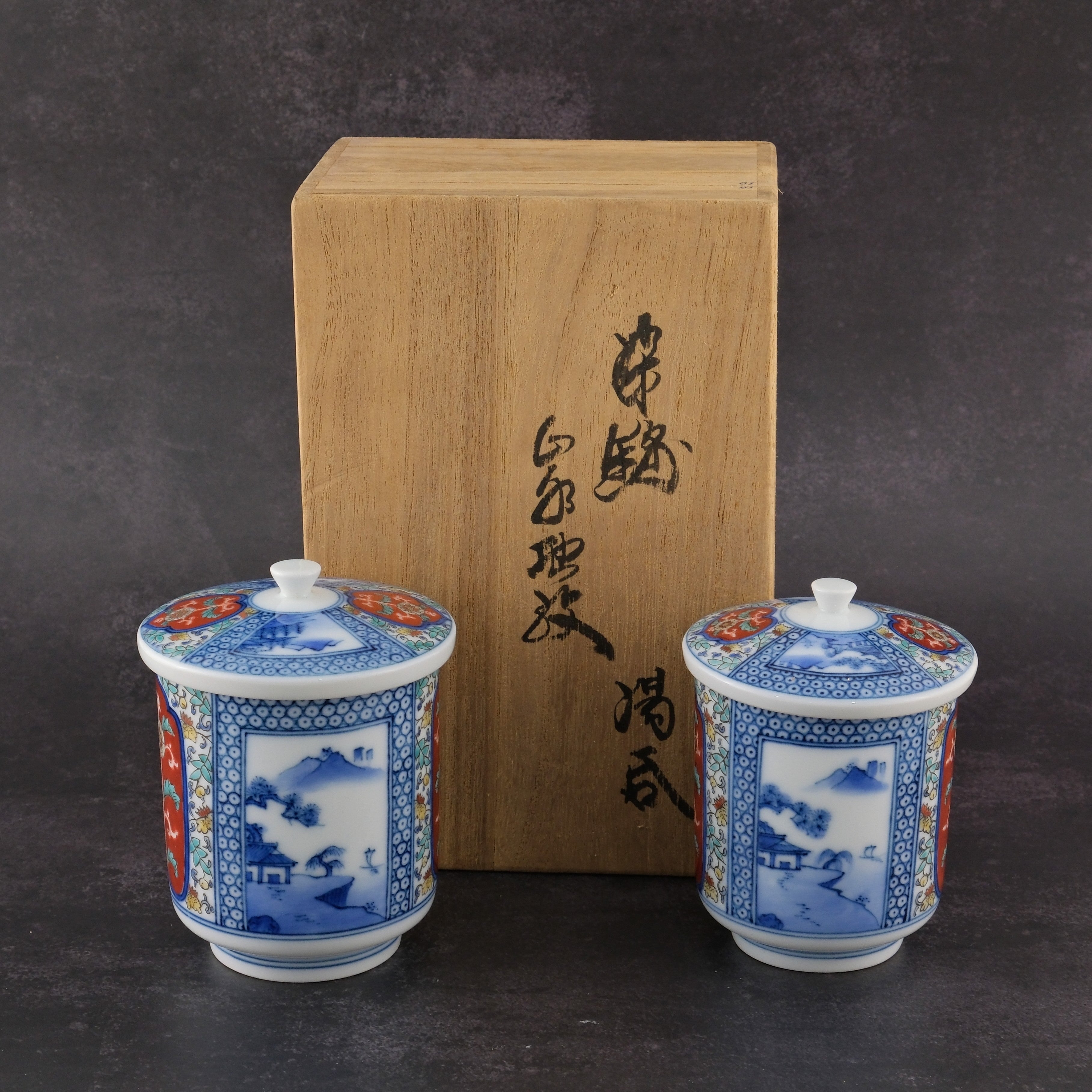
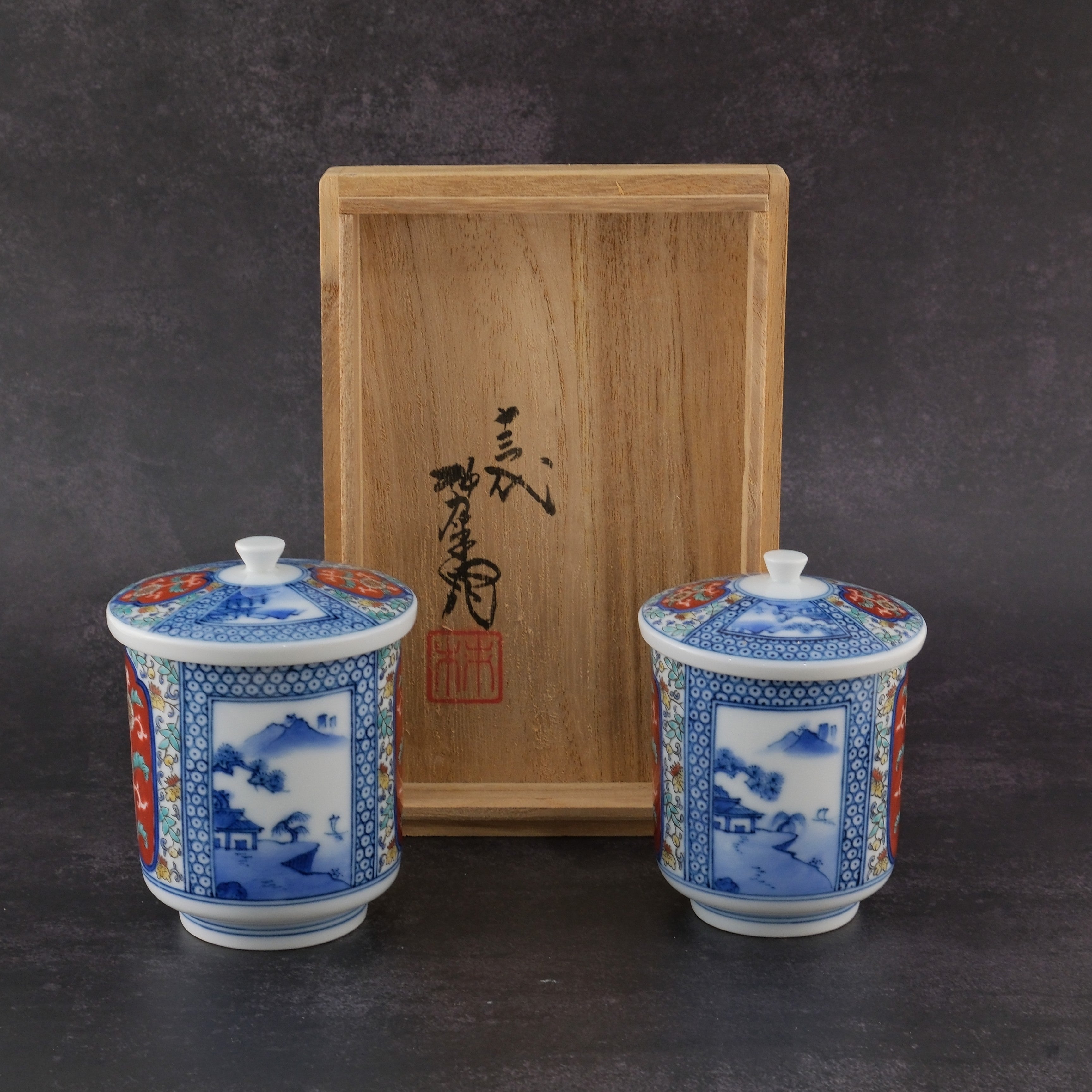
Pair of Yunomi Tea Cups with Landscape Ground Pattern by the 13th Generation Kakiemon
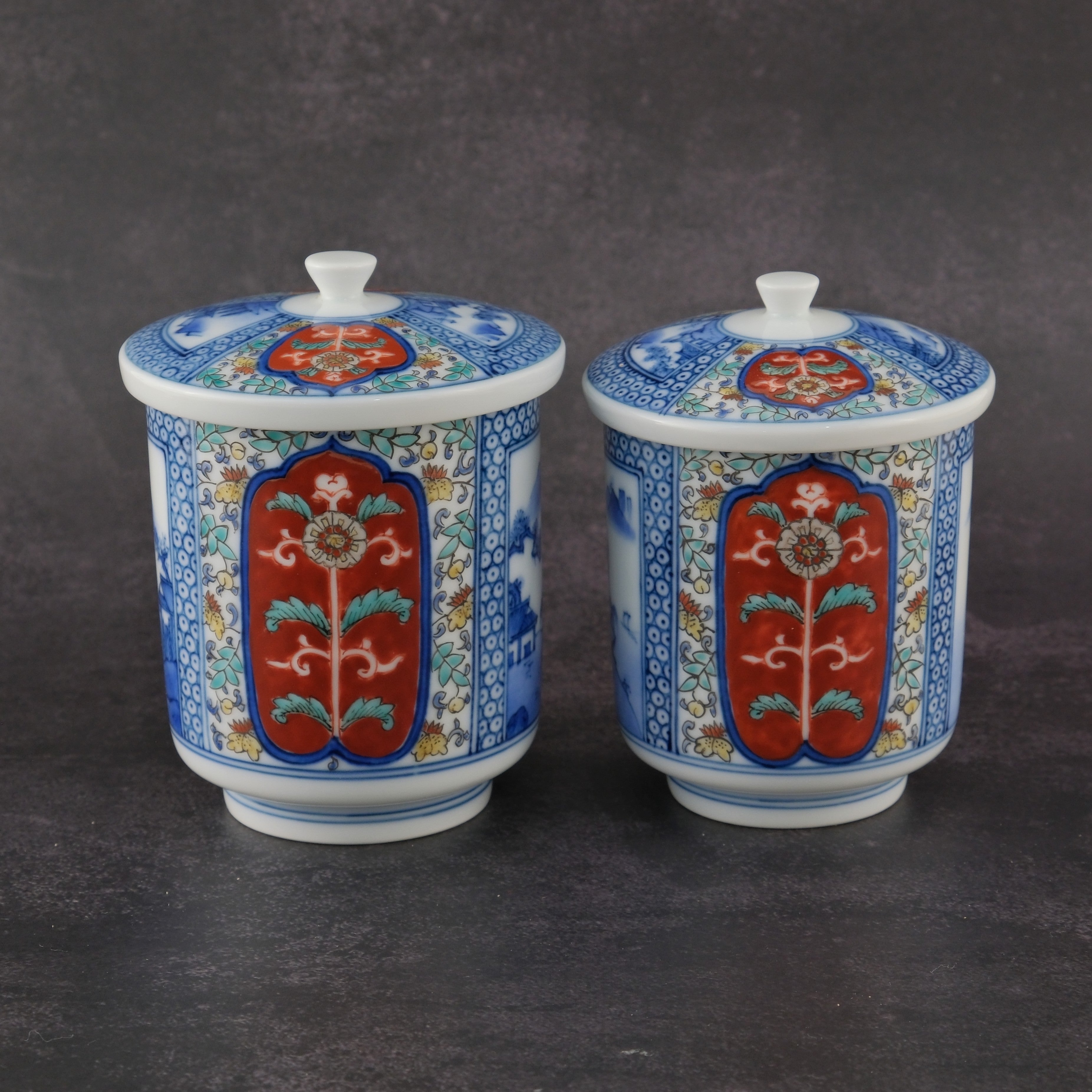
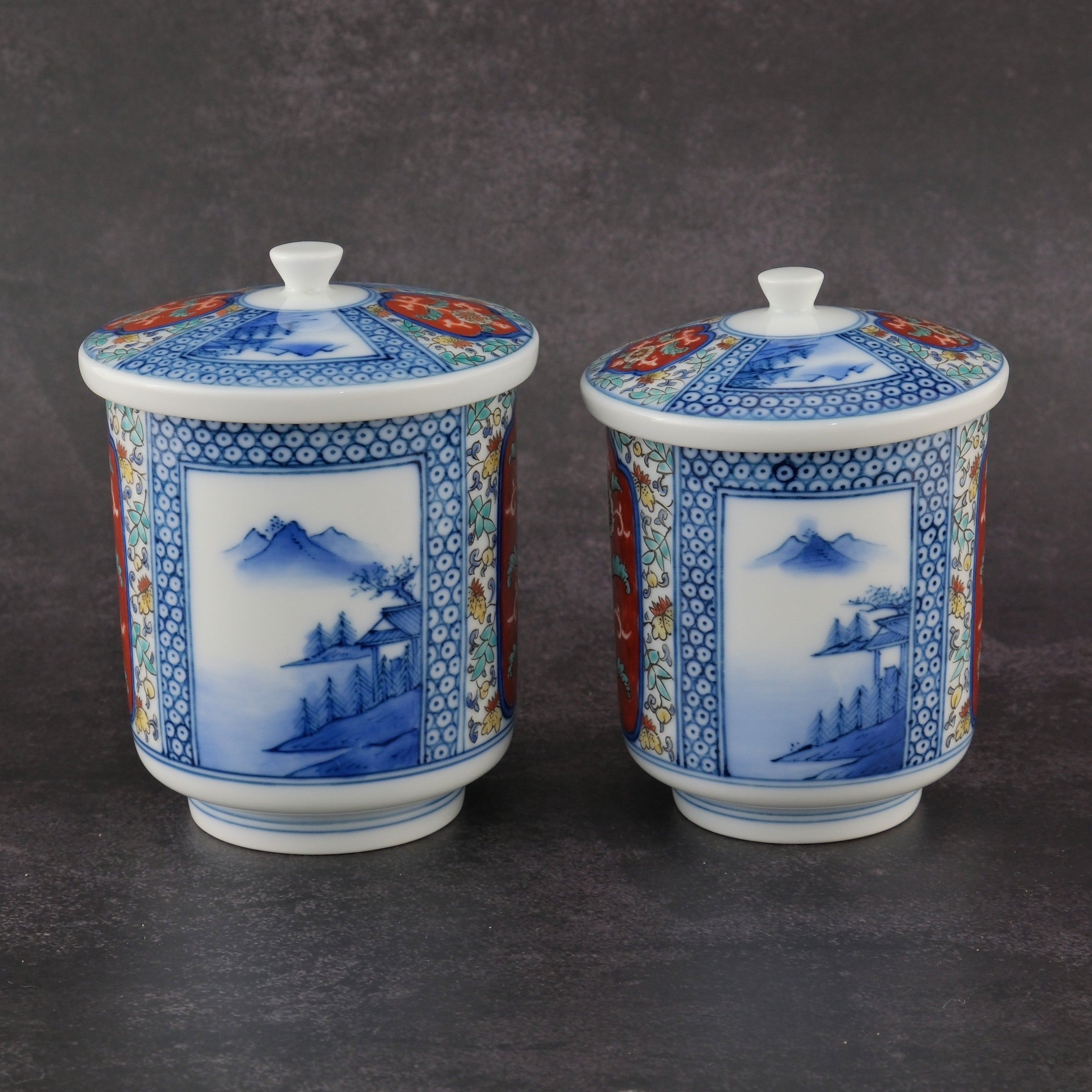
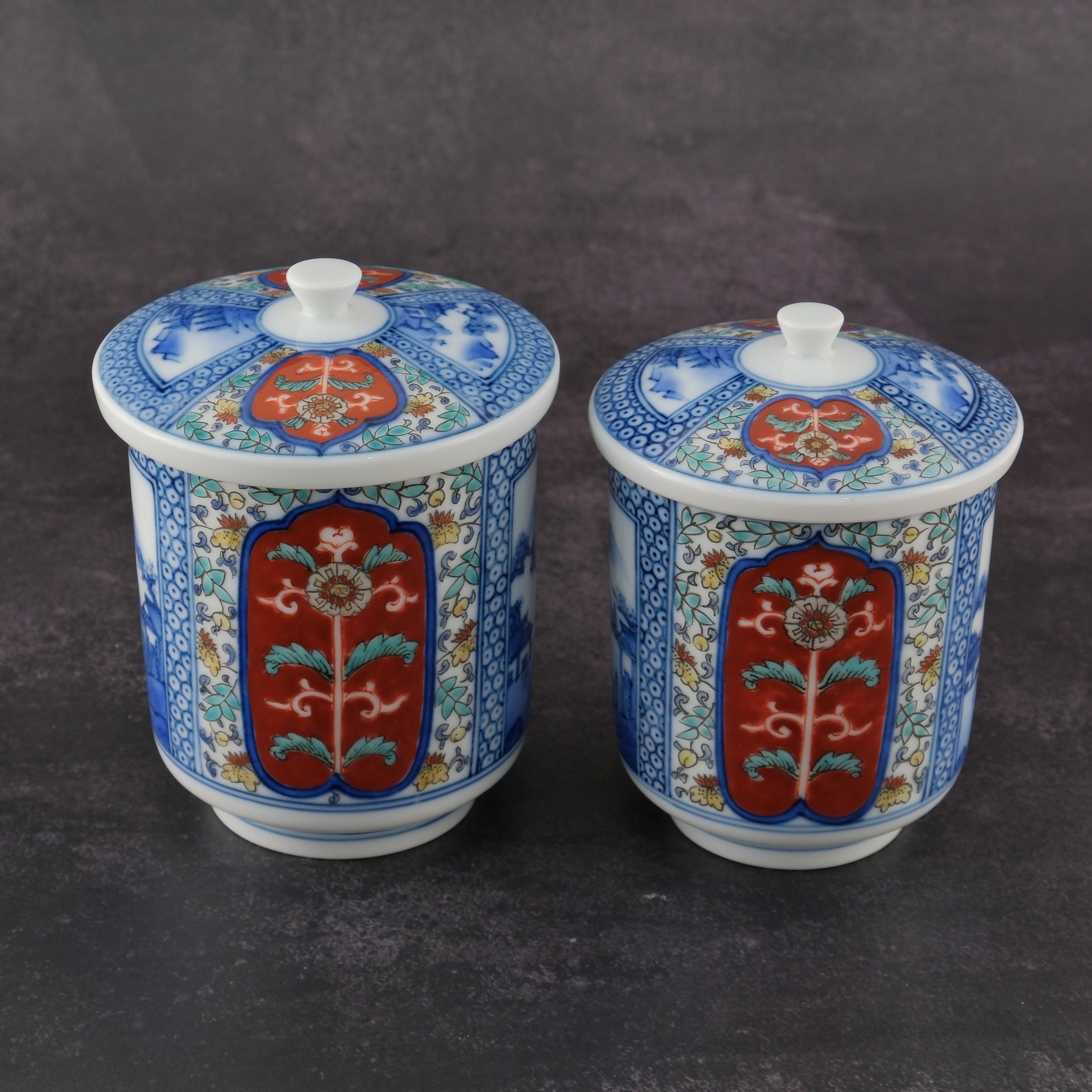
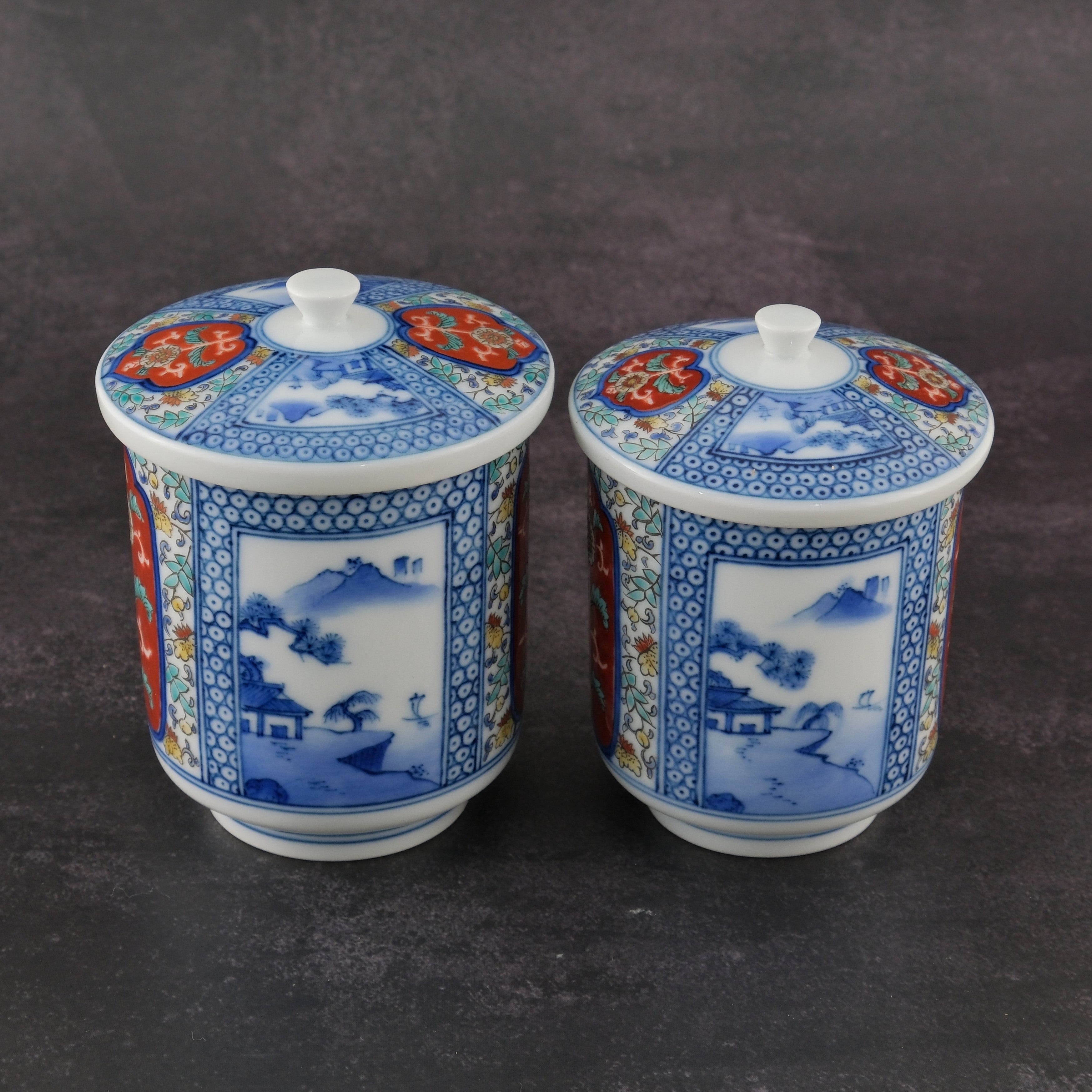
These paired teacups were created by the 14th-generation Kakiemon (1934–2013), a master who carried the historic Kakiemon kiln into the modern era while preserving its iconic white porcelain and refined overglaze painting techniques. The design features a beautifully rendered persimmon motif—an image deeply associated with the Kakiemon family name itself. Painted with the characteristic clarity and restraint of the Kakiemon style, the fruit appears vibrant yet serene against the luminous milky-white porcelain body. The Kakiemon kiln, founded in the 17th century in Arita, is celebrated worldwide for its influence on European porcelain traditions. Its works were exported through the Dutch East India Company and inspired major European kilns such as Meissen and Vienna. These teacups embody the harmony, elegance, and lineage of a 350-year tradition, making them not only functional vessels but also heirloom-quality works of art.

We are offering pieces from my personal collection in celebration of the launch of our new online shop. These teacups were purchased 15 years ago and were briefly displayed in a cupboard, but they have never been used and remain in pristine condition. It is often said that one of the defining characteristics of the Kakiemon style is its masterful use of empty space, creating a sense of balance and quiet elegance. We invite you to take this opportunity to add a pair of teacups crafted by Kakiemon—arguably one of the most renowned names in Japanese porcelain—to your own collection. This style of paired teacups is still produced today. For more information about the Kakiemon kiln, please refer to the following URL: https://onlineshop.kakiemon.co.jp
Large cup: Height 11.3 cm × Diameter 8.0cm
Small cup: Height 9.7cm × Diameter 7.2cm


我们承担所有运费、进口关税和税费。交货时不会向您收取任何额外费用。
选择选项
These paired teacups were created by the 14th-generation Kakiemon (1934–2013), a master who carried the historic Kakiemon kiln into the modern era while preserving its iconic white porcelain and refined overglaze painting techniques. The design features a beautifully rendered persimmon motif—an image deeply associated with the Kakiemon family name itself. Painted with the characteristic clarity and restraint of the Kakiemon style, the fruit appears vibrant yet serene against the luminous milky-white porcelain body. The Kakiemon kiln, founded in the 17th century in Arita, is celebrated worldwide for its influence on European porcelain traditions. Its works were exported through the Dutch East India Company and inspired major European kilns such as Meissen and Vienna. These teacups embody the harmony, elegance, and lineage of a 350-year tradition, making them not only functional vessels but also heirloom-quality works of art.
We are offering pieces from my personal collection in celebration of the launch of our new online shop. These teacups were purchased 15 years ago and were briefly displayed in a cupboard, but they have never been used and remain in pristine condition. It is often said that one of the defining characteristics of the Kakiemon style is its masterful use of empty space, creating a sense of balance and quiet elegance. We invite you to take this opportunity to add a pair of teacups crafted by Kakiemon—arguably one of the most renowned names in Japanese porcelain—to your own collection. This style of paired teacups is still produced today. For more information about the Kakiemon kiln, please refer to the following URL: https://onlineshop.kakiemon.co.jp
Large cup: Height 11.3 cm × Diameter 8.0cm
Small cup: Height 9.7cm × Diameter 7.2cm
我们承担所有运费、进口关税和税费。交货时不会向您收取任何额外费用。
These paired teacups were created by the 14th-generation Kakiemon (1934–2013), a master who carried the historic Kakiemon kiln into the modern era while preserving its iconic white porcelain and refined overglaze painting techniques. The design features a beautifully rendered persimmon motif—an image deeply associated with the Kakiemon family name itself. Painted with the characteristic clarity and restraint of the Kakiemon style, the fruit appears vibrant yet serene against the luminous milky-white porcelain body. The Kakiemon kiln, founded in the 17th century in Arita, is celebrated worldwide for its influence on European porcelain traditions. Its works were exported through the Dutch East India Company and inspired major European kilns such as Meissen and Vienna. These teacups embody the harmony, elegance, and lineage of a 350-year tradition, making them not only functional vessels but also heirloom-quality works of art.
We are offering pieces from my personal collection in celebration of the launch of our new online shop. These teacups were purchased 15 years ago and were briefly displayed in a cupboard, but they have never been used and remain in pristine condition. It is often said that one of the defining characteristics of the Kakiemon style is its masterful use of empty space, creating a sense of balance and quiet elegance. We invite you to take this opportunity to add a pair of teacups crafted by Kakiemon—arguably one of the most renowned names in Japanese porcelain—to your own collection. This style of paired teacups is still produced today. For more information about the Kakiemon kiln, please refer to the following URL: https://onlineshop.kakiemon.co.jp
Large cup: Height 11.3 cm × Diameter 8.0cm
Small cup: Height 9.7cm × Diameter 7.2cm
我们承担所有运费、进口关税和税费。交货时不会向您收取任何额外费用。
These paired teacups were created by the 14th-generation Kakiemon (1934–2013), a master who carried the historic Kakiemon kiln into the modern era while preserving its iconic white porcelain and refined overglaze painting techniques. The design features a beautifully rendered persimmon motif—an image deeply associated with the Kakiemon family name itself. Painted with the characteristic clarity and restraint of the Kakiemon style, the fruit appears vibrant yet serene against the luminous milky-white porcelain body. The Kakiemon kiln, founded in the 17th century in Arita, is celebrated worldwide for its influence on European porcelain traditions. Its works were exported through the Dutch East India Company and inspired major European kilns such as Meissen and Vienna. These teacups embody the harmony, elegance, and lineage of a 350-year tradition, making them not only functional vessels but also heirloom-quality works of art.
